Posts

Showing posts with the label Reading

Reading Notes: Jataka Tales, Part B
Image
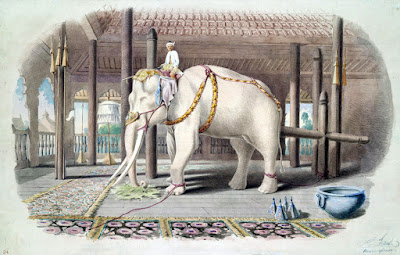
Painting of a decorated white elephant. Source: Wikipedia The King's White Elephant carpenters lived by the riverbank near a forest a limping elephant came to them, hoping they would help remove the splinter in his foot the men removed the splinter and in return, the elephant helped them elephant removed the trees from the ground, rolled logs to the river and brought the carpenters their tools. carpenters fed the elephant morning, afternoon, and night the elephant decided to take his son, who was a white elephant, to the carpenters since they have treated him so well since he was getting older and could not work like he used to the son helped out the carpenters just like his father and would play with the carpenters' children in the river a king came to the river and paid a huge price for the elephant and the baby elephant went to live with the king, who treated him well and took great care of him The Ox Who Envied the Pig Two brother oxen, Big Red and Litt...

Reading Notes: Twenty Jataka Tales, Part B

Image
The Great Elephant A beautiful elephant standing before the sunset. Source: Pixabay A beautiful and lonely elephant in the desert lived in the desert He heard voices and went toward the sound, and found men dehydrated and hungry the elephant wanted to help these people and told them if they wanted to make it to the next city, there will be an elephant to eat and a stream of water to drink from at a certain location the elephant sprinted off really fast when the people arrived at the location, they saw the body of an elephant; and realized that it was their friend who was helping them the elephant sacrificed his body for these men to eat; performed an act of selflessness the men did not want to eat their friend but they did through tears anyways because they did not want his sacrifice to go to waste. they drank from the river and ate the elephant's body to gain enough strength to make it to the next city Use this information to create a story, adding a twist to the en...

Reading Notes: Twenty Jataka Tales, Part A

Image
The Guilty Dogs Group of dogs in the grass. Source: Wikipedia King drive through city in his chariot in the evening, chariot was left outside in the courtyard when they arrived back home in the evening. Horses returned to the stables. started to rain palace dogs saw the leather on the chariot softening in the rain and came to chew on them. they did this all night and left when it became morning the stablemen announced that the straps were eaten and destroyed they tell the king that royal chariot was destroyed and that it was the work of the dogs in the night the king ordered to kill the dogs; to slay each one in the city 700 dogs in the city heard the announcement and became scared. However, one dog, the chief, cared for and protected all of the dogs. the other dogs went out to go find him when they found him he asked what was wrong and what brings them all together? All the dogs looked really sad one of the dogs tells the chief that the leather chariot was damaged and...

Reading Notes: The Jataka Tales of India, Part B

Image
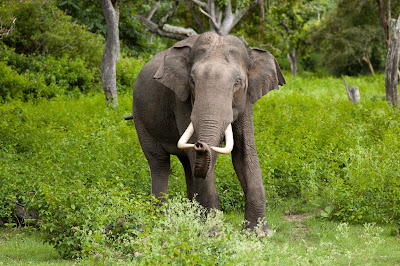
Image of a tusked Asian elephant in India. Source: Wikipedia The Elephant Girly Face Girly face - name of an elephant; named after being so kind and gentle this elephant never hurt anyone robbers came to the area and sat on the ground where Girly Face was sleeping; they talked and woke up the elephant; they talked of breaking into a house; they would kill anyone who would wake up; they said a robber shouldn't be afraid to kill and they have to be cruel and have no pity. A robber can never be good. Girly face heard all of this and thought that these men are teaching her how to act the next day, the elephant killed the keeper who arrived to feed him by slamming him to the ground; another keeper came to see what was going on and he ended up killing him too for several days Girly face was like this an no one wanted to come near her. However, they still left food for her The King found out about the behavior of the elephant and sent one of his wise men to find out what is ...

Reading Notes: The Jatakas Tales of India, Part A

Image
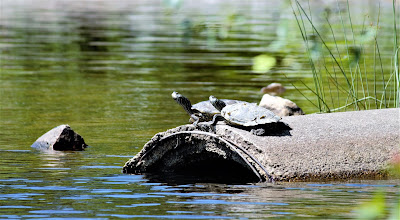
Two turtles on a pipe in a pond. Source: Pexels The Turtle Who Couldn't Stop Talking Turtle lived by a pond geese were looking for food; became friends with the turtle; came often geese ask if the turtle wants to join them in going to their home that is far from where the turtle is geese offered to take him only if the turtle could keep his mouth shut turtle agrees and says he will keep his mouth shut geese wanted the turtle to hold the stick while the geese hold the other ends as they were flying, some children saw the three of them and said that they looked ridiculous the turtle couldn't keep his mouth shut and began to say that it is none of their business the turtle let go of the stick and fell to his death geese left and proceeded to their home lesson: the turtle couldn't keep his mouth shut and lost his life because of it Bibliography: Babbitt, Ellen. The Jatakas Tales of India, Part A. Source .

Reading Notes: Narayan's Secret, Part B

Image
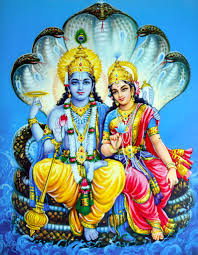
Narayan with Lakshmi, his consort. Source: Flickr Narayan is a God, in the image, his deep sleep represents the dissolution of the world. The universe does not exist when god is sleeping, just as we are not aware of the world when we are asleep. world exists and stops existing with the cycles of Narayan's sleep  Greeks, Christians, Muslims, do not believe in rebirth - have chronic need to be heroes, be "saved" and to surrender to God. Hindus do not have this dillemma because of the rebirth belief. we have many lives to live and in different worlds that exist. ocean of milk represents possibility shesha - serpant - the remainder that remains when everything is destroyed. Narayan sleeps on Shesha - when he sleeps, time is still Shesha - Adi Shesha or Ananta Shesha, primal or endless remainder World exists when Narayan is asleep but no one is aware of its existence no observation w/o observer. Observer = Narayan consciousness = uncreased paper, beins to cr...

Reading Notes: Epified: Mahabharata, Part B

Image
Sculpture of Suryadev, the sun god. Source: Wikipedia Kunti's past - she was raised by her uncle, Kuntibhoj, who loved her as she was his own daughter. Sage Dhurwasa visited the kingdom one day. This sage was very short tempered and was known for cursing people who even slightly offended him. Everyone feared him except Kunti. They had a good relationship and talked about spiritual things. He eventually gifted her with a mantra whispered in her ear. She had no idea what this meant, so she asked the sage what this was for. He told her that this mantra could summon any god she wished for. When the sage left, a curious Kunti wanted to test this mantra to see if it would actually work. She spoke the mantra while facing the sun and Suryadev, the sun god, appeared before her! She was so shocked that she could not answer the sun god when he asked why she has summoned her. Kunti embraced the Suryadev and as the blinding light faded, she had a child in her arms. However, because she was...

Reading Notes: Epified: Mahabharata, Part A

Image
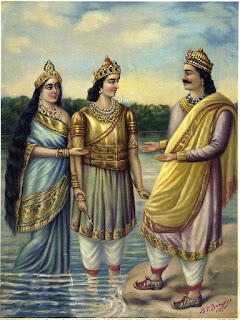
Shantanu meeting his son, Devavrat, for the first time. Source: Wikipedia Shantanu fell in love with a goddess, Ganga, and would not question her. She drowned the first child and the king was so upset, but said nothing as the queen drowned the next 6 children. He finally stepped in to prevent the death of his 8th child. Ganga revealed that the children were drowned because they were celestial spirits being punished for something they did in their past lives. She took the 8th child and vanished. 16 years later, Shantanu visited the riverbank of Ganga because he really missed Ganga and his son that she took away. He was interrupted by some sounds of fighting which turned out to be a young archer taming the Ganga river by shooting arrows into the river. All of a sudden, Ganga appeared and told Shantanu that the young archer was actually his son, Devavrat. He was taught by the sage Parshuram. Shantanu brought back Devavrat to his kingdom. The people of the kingdom were really hap...

Reading Notes: Mahabharata, Part D

Image
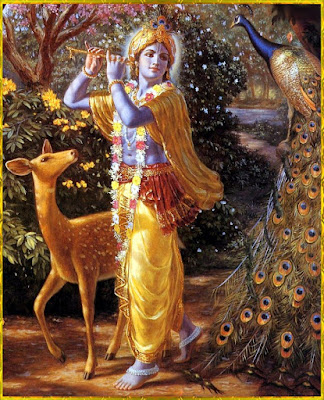
Krishna, an avatar of Lord Vishnu. Source: Wikipedia Krishna goes to Hastinapura as an emissary and Dhritarashtra throws a lavish reception for him. Vidura says that Krishna is not interested in such reception that is over the top but only wants peace and justice. Meanwhile, Duryodhana makes plans to kidnap Krishna. When Krishna is in Hastinapura, he sees Kunti and they talk; she informs him about the news of her sons. Krishna asks Duryodhana and asks for peace but he is ignored. Not even the urging of his mother makes him change his mind. When Krishna escapes his avatar and becomes his true form. Duryodhana realizes that Krishna cannot be captured. Krishna tries to convince Karna to leave Duryodhana but it did not work. Karna warns Kunti that he will only attack Arjuna but will leave the other 4 sons alone. I believe this is a really intense scene since it is right before the beginning of the war. A lot of dialogue between the characters, especially Krishna and Duryodhana ...

Reading Notes: Mahabharata, Part C

Image
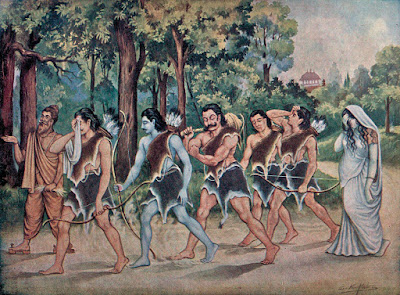
The Pandavas being exiled for 14 years. Source: Wikipedia Pandavas are living in the forest because they were exiled. Brahmin comes up to them saying a deer stole his staff and kindling needed to make the fire for a ritual. Pandavas try to catch the deer, but they fail. Tired and thirsty, they drink from a lake even though a voice tells them that they need to answer a question before they take a sip of water from the lake. The Pandavas ignore the voice and they all die, one by one. Lastly, Yudhishthira hears the voice and answers the question that the others ignored. The voice turned out to be his father's, Yama, God of death and dharma. It was a test that all but Yudhishthira failed. The rest of the brothers are revived and are given the gift of unrecognizability so that they can return back to civilization during their thirteenth year of exile. For my storytelling, I want to write about the Pandavas' exile and their time in the forest. I will add dia...

Reading Notes: Mahabharata, Part B

Image
Ulupi and Arjuna. Source: Wikipedia Duryodhana distressed to find Pandavas still alive. Dhritashtra cannot hate the Pandevas as much as his son does; Bhishma and Vidura tell him to try to make peace between the cousins. Karna urges was as they were both seen as traitors. Dhritarashtra tells Vidura to go to the Pandevas and tell them to come back to Hastinapura, and will give them a part of his kingdom. He does as he says when the Pandevas return. The sage Narada warns the Pandevas about the consequences of sharing a wife (Draupadi). Arjuna is sent on exile (since he intruded on Draupadi and Yudhishthira when they were married). Arjuna marries Ulupi, naga princess, and Subhadra, Krishna's sister, during his exile. For my story telling I want to elaborate and explain in great detail the exile of Arjuna and the events that lead to his marriage to not just one woman, but two. Arjuna is one of my favorite characters in the Mahabharata because of the stories I was told when ...

Reading Notes: Mahabharata, Part A

Image
Goddess Ganga presenting (future) Devavrata to Shantanu. Source: Wikipedia Shantanu (King of Hastinapura) -> falls in love with woman by river (Turns out to be Goddess Ganga) Ganga drowned all but 1 child, named Bhishma (Devavrata) Shantanu -> falls in love with Satyavati (fisherman's daughter) - rules: children must be successor Bhishma renounces succession They have 2 sons, Chitrangada and Vichitravirya I want to write my story about the love story between Shantanu and his lovers. I will create a story which will show a great tragedy when Shantanu loses Ganga and his 7 children. There will be lots of dialogue to show the intense emotions and feelings of Shantanu. When he falls in love with Satyavati, I will make the scene as if Shantanu could never find love again but ends up finding it in Satyavati. The beginning chapters were a little heartbreaking for me to read and I believe that it is a great section that can be elaborated and explained in more detail, becom...

Reading Notes: Ganesha's Secret, Part A

Image
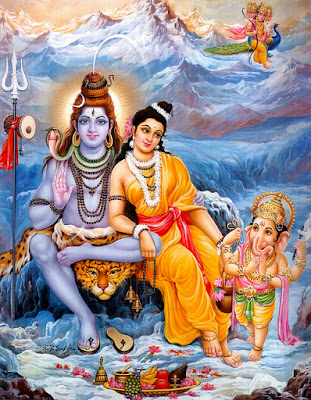
Notes Shiva - a mountain mendicant Parvati - a mountain princess Ganesha - son; has head of an elephant Kartikeya - son; holds a spear Having 4 arms, or a river flowing out of a god's head is a normal concept for Hindus because they have been raised knowing this is just the way it is and no one ever has the need to rationalize the reasoning. The divine can take different forms: as animals, plants, human beings, etc. God is not singular in Hinduism Narat visited Shiva and Parvati and offered a mango to the better son. To determine who was better, Narat suggested they race around the world 3 times and whoever arrives first, wins. Kartikeya hopped on his peacock and took off. Ganesha stayed with his parents and did not move. As Kartikeya was returning from his third time around the world, Ganesha quickly got up and ran around his parents three times and stated that he won. Ganesha went around his world (his parents) as Kartikeya went around the world. The world is viewed th...

Reading Notes: Sita Sings the Blues, Part B

Image
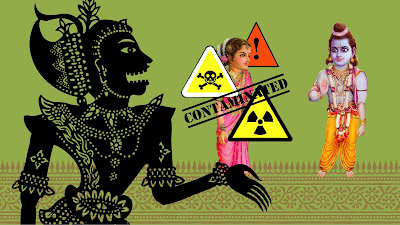
Image showing Sita as being contaminated so Rama abandons her. Source: Wikipedia Sita announces her pregnancy to Rama and tells Lakshmana to leave Sita in the forest, assuming that the child is not his Lakshmana is really upset that Rama told him to do such a thing, but still does as he was told and leaves Sita Sita thinks about suicide but doesn't do anything since she is pregnant Sita is rescued by Valmiki She gives birth to twins and named them Lava and Kusha Rama discovers the twins singing in the forest and realizes that they are bore from him Sita proves her purity and leaves Rama. I believe Sita did the right thing because Rama didn't believe her in the beginning, when she needed it the most. How can a husband abandon his wife in the forest with just assumptions of unfaithfulness? Lakshmana should have intervened and done something to change the story. Bibliography: Paley, Nina. Sita Sings the Blues.  Source .

Reading notes: Sita Sings the Blues, Part A

Image
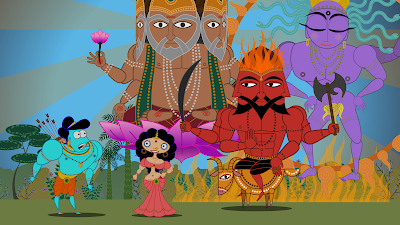
Rama and Sita with some of the Gods. Source . This film makes the Ramayana easier to understand, without all of the elaborate language that was in the books. It is really similar to the PDE edition of the Ramayana in the way of story telling. Sita, Janaka's daughter Rama, son of King Dasharatha - one of 4 sons Kaikeyi, one of Dasharatha's 3 wives  - exiles Rama, the king dies after. Sita and Rama go into the forest, Rama slays rakshashas. Ravana - devoted to Shiva but is still a villain Surpanakha, Ravana's sister, mad at Rama and suggests that Ravana take Sita away from him. Ravana sends Maricha to turn into a deer and lure Sita towards Ravana. Rama tries to capture the deer (Maricha) and Ravana take Sita away in a chariot. Hanuman goes to find Sita and ends up setting Lanka on fire and goes back to Rama Rama battles rakshashas, as he brought Hanuman's army to fight Ravana and they win Rama rejects Sita because she was with Ravana and in his house and...

Reading Notes: Ramayana, Section D

Image
Vibhishana as a newly crowned king of Lanka. Source: Wikipedia For my storytelling, I want to write about the battle scene between Rama and Ravana. I found this scene interesting and it kept me engaged in reading. When I do my retelling, I will make the scene more intense with exchanges of dialogue between the characters, especially Rama and Ravana. I will add a lot of dialogue because I feel that it is really important, especially in a scene like this. The readers need to know the thoughts and feelings of the characters through the conversations (or arguments) they have with each other. Instead of Rama using Brahma's flaming weapon, I want Ravana to be killed by a lightning bolt created by Rama with the new found power he secretly was hiding from everyone. I believe this will throw an interesting twist to the story and make it more interesting. I want the crowning of Vibhishana to be the most royal and elaborate ceremony where everyone is there to celebrate the joyous oc...

Reading Notes: Ramayana, Section C

Image
Hanuman being taken to Ravana. Source: Wikipedia For my storytelling for this week, I want to recreate the moment where Ravana is persuading Sita to leave Rama for him, all while Hanuman is watching the whole moment. The thing I want to change is the perspective of the scene. I want to tell my story through the eyes of Sita and try to explain what she is feeling while Ravana is trying to pursue her. The section about this scene in the PDE Ramayana is quite short. However, I will lengthen it with Sita's thoughts and I will also add some dialogue between Sita and Ravana. I would like to add the section where Sita and Hanuman meet and have a conversation. I want to portray through words that Sita is happy to see him and that this means Rama will be coming soon to save her. I will add dialogue between Hanuman and the people who capture him to bring him to the feet of Ravana and probably will change the setting where Hanuman and Ravana meet. Bibliography: PDE Ramayana, M. Dutt,...

Reading Notes: The Ramayana, Section B

Image
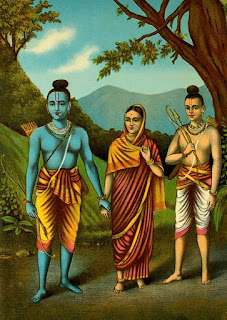
Rama, Sita, and Lakshmana. Source: Wikipedia The golden deer moment in Part B of the Ramayana was my favorite. I want to make it a more dramatized moment. The moment where the rakshasa Maricha imitated Rama with his dying breath and that leading Lakshmana to Rama, leaving Sita alone was an intense moment and I want to amplify that and elaborate the moment. I want to add more detail to the scene and make Sita's kidnapping by Ravana more intense as well.  Overall, I want to recreate my story with as much imagery as possible because I feel like the PDE of the Ramayana is not vividly written where one can imagine a scene. This is a good thing because it leaves the mind to creativity. However, it is not ideal because it is hard to imagine the setting for someone who is not familiar with India's history and architecture. India is known for its elaborate kingdom-like structures and royal palaces. One who is not already familiar with the structures would have trouble imagining w...

Reading Notes: Ramayana, Section A

Image
Rama capturing the deer that Sita requested. Source: Flikr I would like to have a focus on Rama, as he is my favorite character in the Ramayana. I want my story to have a Romeo and Juliet feel to it when someone is reading it. There will be more dialogue and I will have a section where Rama and Sita actually meet and find a way to converse with each other, depending on the time period I choose to have the setting. If it is modern, then they will come up with a way to talk via phones. If the setting is still at the same time period as the book currently is, they will use carrier pigeons to communicate. It will definitely be slower, but they will still be able to express their love for each other.  When Rama is exiled, I want him to go through the jungle and find an abandoned home to live in. He will live there with Sita and Lakshmana. When Dasharatha dies, I will write about how hard it is for him without any of his sons being there with him as he takes his last brea...

Reading Notes: Babbitt's The Turtle and the King

Image
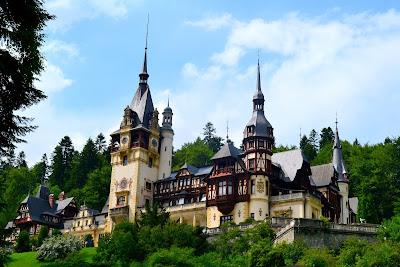
The Turtle and The King Focus on Setting: The story does not have a setting but there is a lake, as well as a courtyard and it involves a king and his children. I would assume the setting would be in a castle somewhere long ago, probably in the 1400-1600s, in the autumn season. I want my setting to be in a castle in the foothills of the Bucegi Mountains in Romania, taking place around the same time period, around the 1500s. I really like the time period back then, with all of the old-time features like the clothing, modes of transportation, elaborate living of the royalty, and other aspects of that particular era. Peles Castle in Romania. Source: Pixabay Focus on One Character: My favorite character in this story was the old man who was afraid of water. He suggested that the turtle was thrown into the water as a punishment and as an intent for it to be killed. Little did he know that the turtle would actually thrive in that setting. For my story, I want the old man to kno...